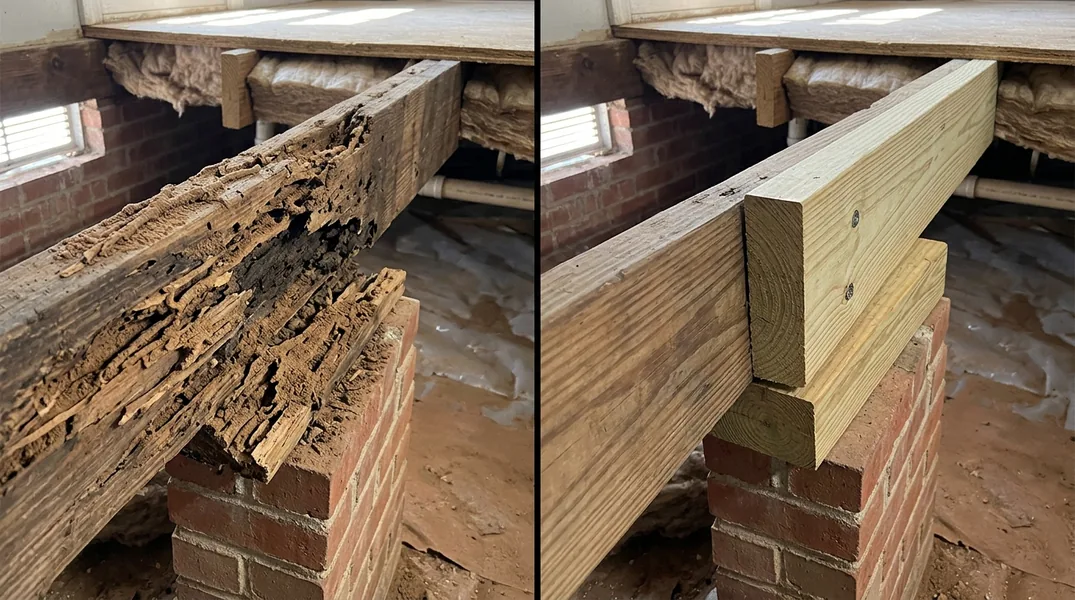
Understanding Wood Rot vs. Termite Damage in Mississippi Homes
Wood rot and termite damage are two of the most common structural threats facing homeowners in Jackson and across Mississippi. While both can compromise the integrity of your home, they are fundamentally different problems that require different solutions. Understanding the distinction is the first step toward making an informed repair decision.
Wood rot, also called dry rot or wet rot depending on moisture levels, occurs when fungi break down the cellulose in wood fibers. This process weakens the wood from the inside out, making it soft, crumbly, and structurally unsound. Termite damage, on the other hand, results from wood-eating insects that tunnel through timber, leaving hollow galleries and weakened sections. Both conditions can go unnoticed for months or years, which is why regular inspections are critical. If you suspect either problem in your home, contact Jackson Carpentry for a free estimate to assess the damage and discuss your options.
Can You Repair Rotted Wood Without Replacing It?
The short answer is yes, but only in specific circumstances. Minor surface rot that has not penetrated deep into the wood's structural core can sometimes be treated and stabilized without full replacement. This approach works best when the rot is caught early and affects less than 10 to 15 percent of a beam, joist, or siding board. Professional carpenters can remove the affected wood, treat the area with fungicide, and apply epoxy or hardening compounds to restore some structural integrity.
However, repair without replacement has significant limitations. Once wood rot spreads into load-bearing members like floor joists, rim boards, or roof trusses, attempting to patch the problem is risky and often fails inspection. Mississippi's humid climate and occasional flooding create ideal conditions for fungal growth, meaning rot can advance quickly if moisture sources are not eliminated. Wood Rot & Dry Rot Repair specialists at Jackson Carpentry evaluate the extent and location of damage to determine whether repair or replacement is genuinely safe. Choosing the wrong approach can lead to costly failures and safety hazards down the road.
Termite Damaged Wood Repair: Restoration vs. Full Replacement
Termite damage presents a different challenge than fungal rot. Because termites hollow out wood from the inside while leaving the outer shell intact, damage is often hidden until it becomes severe. A beam that looks solid on the surface may be 80 percent compromised internally. This makes assessment by a trained professional essential before deciding whether repair is viable.
Termite Damage Repair in Jackson can sometimes involve injecting epoxy into galleries, reinforcing the wood with sister boards, or using metal bracing to restore function. These techniques work for non-structural elements or when damage is minimal and isolated. However, if termites have compromised a load-bearing wall, beam, or floor system, replacement is almost always necessary. Additionally, termite damage repair must be paired with pest control and moisture management, or the problem will simply recur. Jackson Carpentry works with local pest control specialists to ensure your home is protected before we begin structural repairs.
When to Replace Rotted Wood Siding and Trim
Exterior wood siding and trim are among the first casualties of Mississippi's weather. Unlike interior framing, siding serves both a protective and aesthetic function, so damage is often more obvious. The good news is that siding replacement is usually straightforward and does not require structural engineering approval. If your siding shows soft spots, deep cracks, paint failure, or visible rot, replacement is typically the best option.
Attempting to repair rotted wood siding with filler or paint is a temporary cosmetic fix that masks ongoing decay. Moisture continues to penetrate, rot spreads, and the problem worsens. Full board replacement is more cost-effective in the long run because it eliminates the moisture source and prevents secondary damage to the sheathing and framing behind the siding. When you replace rotted wood siding, you also have the opportunity to upgrade to more durable materials such as fiber cement board or engineered wood products that resist rot and termites far better than traditional lumber. Jackson Carpentry can help you evaluate siding options and provide professional installation that protects your home for decades.
Wood Rot & Dry Rot Repair Cost in Jackson: What to Budget
The cost of wood rot repair varies dramatically depending on the extent of damage, the location, and whether repair or replacement is necessary. Minor surface rot on a small area of trim might cost $300 to $800, while replacing an entire rotted rim board or floor joist can range from $2,000 to $8,000 or more. Floor Joist & Subfloor Repair projects tend to be on the higher end because they involve structural work that requires temporary support and often building permits.
Several factors influence wood rot repair cost. The size and depth of the affected area, the type of wood involved, accessibility, and whether moisture sources need to be addressed all play a role. Load-bearing structural elements cost more to repair than non-structural trim or siding. If your home requires Beam Replacement & Load-Bearing Wall Removal, costs can exceed $10,000 because the work demands temporary bracing, engineering plans, and building permits. To get an accurate estimate tailored to your situation, call Jackson Carpentry at (601) 524-2500 or request a free estimate online. We provide transparent pricing with no hidden fees.
How to Decide: Repair or Replace Your Rotted Wood
The decision between repair and replacement should be based on five key factors: the extent of damage, the location and structural importance of the affected wood, the cost difference between the two options, the age and condition of surrounding materials, and your long-term plans for the home. If damage is limited to less than 10 percent of a non-structural element and the cost of repair is significantly lower than replacement, repair may be reasonable. If damage is extensive, affects load-bearing members, or is located in areas prone to moisture, replacement is almost always the safer and more economical choice.
Professional assessment is non-negotiable when the stakes are high. A qualified carpenter can probe the wood, measure moisture content, and determine whether decay is active or dormant. They can also identify the moisture source that caused the problem in the first place. Without eliminating that source, any repair will eventually fail. Jackson Carpentry provides comprehensive inspections and honest recommendations based on what your home actually needs, not what generates the largest bill. Whether the answer is repair, replacement, or a combination of both, our goal is to restore your home's structural integrity and protect your investment. Contact us today at (601) 524-2500 to schedule your inspection and get peace of mind.
Looking for a professional carpentry contractor in Jackson? Jackson Carpentry responds fast for all your carpentry needs.
Get a Free QuoteOur services: Wood Rot & Dry Rot Repair · Termite Damage Repair · Floor Joist & Subfloor Repair