The Jackson Problem: Why Your Doors Won't Close Properly
If you live in Jackson and your interior doors have started sticking, you're not alone. Homeowners throughout the area report the same frustrating issue: doors that once glided smoothly now bind against their frames, requiring a hard push or pull to open and close. The problem isn't poor craftsmanship or a faulty door. Instead, it's rooted in the unique geology and climate of central Mississippi.
The real culprit lies beneath your home. Jackson is built on Yazoo clay, a dense, expansive soil that swells when wet and shrinks when dry. This natural movement directly affects your home's foundation and framing. As the soil expands and contracts with seasonal rainfall and drought, your house settles unevenly. When the frame shifts, even by a fraction of an inch, door frames become misaligned. Suddenly, that door that fit perfectly last year now sticks in its frame.
Understanding Yazoo Clay and House Settling
Yazoo clay is a common soil type found throughout central Mississippi, and it behaves very differently from sandy or loamy soils found in other regions. This clay has a high shrink-swell potential, meaning it expands significantly when saturated and contracts when dry. During Jackson's wet winters and springs, the clay beneath your foundation absorbs moisture and pushes upward. During dry summers and falls, it shrinks, allowing the foundation to settle downward. This cycle happens year after year, and over time, it causes cumulative stress on your home's structural framing.
House settling is a natural process, but the extent of movement matters. Minor settling, measured in fractions of an inch, can still create noticeable problems with door operation. When a foundation shifts unevenly, the wooden framing that supports your door frames warps or twists slightly. Doors are remarkably sensitive to frame geometry. Even a quarter-inch of misalignment can cause binding. The problem is compounded if your home has experienced any structural stress from other sources, such as Wood Rot & Dry Rot Repair issues or water damage that has weakened support beams. If you suspect structural movement is affecting your home, it's worth having a professional inspect your foundation and framing.
Humidity Swings and Wood Movement
Beyond foundation settlement, the humid subtropical climate of Jackson creates another major problem for doors: wood movement due to moisture. Wood is hygroscopic, meaning it absorbs and releases moisture based on the surrounding air. When humidity rises, wood expands. When humidity drops, it shrinks. The Mississippi climate swings between very humid summers (often 80 to 90 percent relative humidity) and drier winters, creating significant moisture fluctuations throughout the year.
Door frames and doors themselves are made of wood, and they respond to these humidity changes. A solid wood door can expand or contract by up to one-half inch across its width in response to seasonal humidity changes. The frame expands and contracts at a slightly different rate than the door itself, or the frame may expand while the house is settling in the opposite direction. The result is a door that fits snugly in winter but binds in summer, or vice versa. This is why sticking doors in house are particularly common in the South. Homeowners often notice the problem worsens during specific seasons, which is a telltale sign of moisture-related wood movement rather than a permanent structural issue.
When Door Problems Signal Deeper Structural Damage
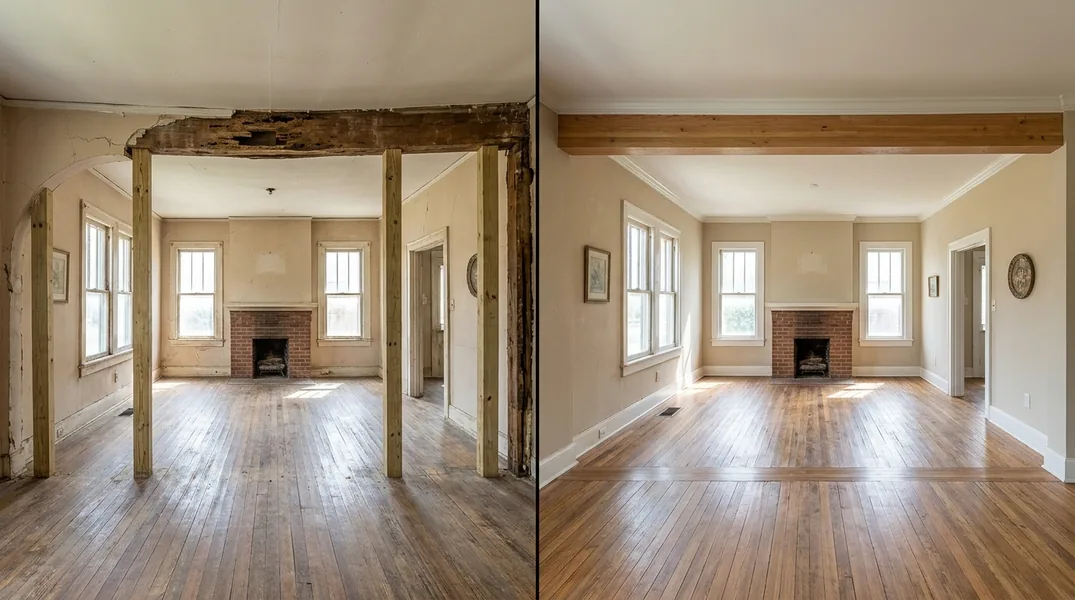
While most sticking doors are simply the result of normal settling and humidity swings, sometimes they're a warning sign of more serious problems. If your doors are sticking severely, or if you notice other symptoms like cracks in drywall, sloping floors, or visible gaps between walls and ceilings, your home may have structural issues that require professional attention. Water damage, rot, or pest damage can weaken the wooden framing that supports your doors and walls. Over time, this damage causes the framing to sag or twist, which pulls door frames out of square.
If you suspect structural damage, don't ignore it. Issues like Wood Rot & Dry Rot Repair, Termite Damage Repair, or problems with Floor Joist & Subfloor Repair can cascade and affect the entire structural system of your home. A professional carpenter can inspect your framing, identify the root cause of your sticking doors, and recommend the appropriate repair strategy. Some problems are cosmetic and can be addressed with door adjustments or planing. Others require deeper intervention, such as reinforcing beams or replacing damaged structural members.
How to Fix Sticking Doors: Simple Adjustments vs. Professional Repair
The solution to a sticking door depends on what's causing the problem. If the issue is minor and seasonal, you may be able to address it yourself. Start by checking whether the door frame is square using a level. If the frame is still square, the problem may be that the door has swelled due to humidity. You can try sanding the edges of the door slightly to reduce friction. However, be cautious: if you remove too much material and humidity drops, the door will then have gaps around it. A better short-term solution is to use a humidifier in winter and a dehumidifier in summer to moderate indoor moisture levels, which can reduce wood movement.
For more serious cases, or if you're uncomfortable making adjustments yourself, professional repair is the best option. A carpenter can assess whether the frame is square and, if not, determine whether the misalignment is caused by settling or by other structural issues. They may need to shim the frame to bring it back into square, or in some cases, partially disassemble and reassemble the door frame. If the underlying cause is foundation settlement or structural damage, a professional can identify that and recommend repairs. If you're dealing with persistent sticking doors in Jackson, contact Jackson Carpentry at (601) 524-2500 to schedule a free estimate and get a professional diagnosis.
Prevention and Long-Term Solutions for Jackson Homeowners
While you can't stop Yazoo clay from expanding and contracting, you can take steps to minimize the impact on your home. Proper drainage around your foundation is critical. Make sure gutters and downspouts direct water away from the house, and ensure the ground slopes away from the foundation. During heavy rain, water should not pool against your foundation. This reduces the amount of moisture the soil absorbs and helps stabilize foundation movement. Additionally, maintaining consistent indoor humidity levels (between 30 and 50 percent) can reduce wood movement in doors and frames.
If your home is older or has a history of door problems, consider having a professional structural inspection. Some homeowners invest in foundation stabilization measures, such as installing additional support posts or addressing drainage issues, to reduce settling. While these measures won't eliminate door sticking entirely, they can significantly reduce its severity. For ongoing door maintenance, check your doors periodically and make minor adjustments as needed. If you notice new or worsening problems, reach out to a local carpenter who understands the specific challenges of building in Jackson. Jackson Carpentry has years of experience addressing structural and framing issues unique to this region. Call (601) 524-2500 or visit our website to learn more about how we can help keep your home in good working order.
Looking for a professional carpentry contractor in Jackson? Jackson Carpentry responds fast for all your carpentry needs.
Get a Free QuoteOur services: Wood Rot & Dry Rot Repair · Termite Damage Repair · Floor Joist & Subfloor Repair